
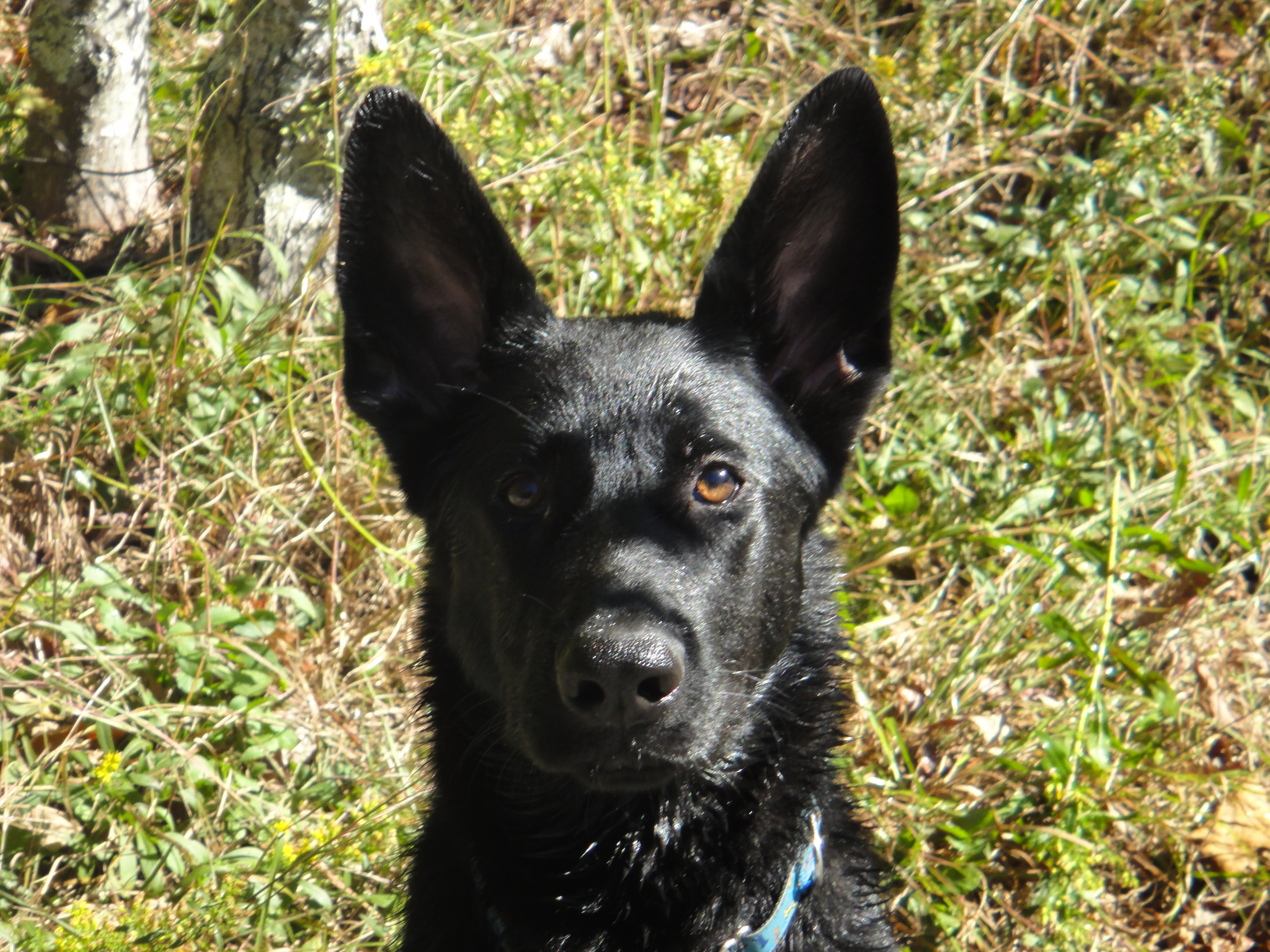
Ripley with Raina at 5 days old
So in my attempt to tackle what i believe is an insanely prideful, pointless battle between “trainers” on the topic of positive only training I will outline below what is actually the most accurate method of training that curtails to both “positive only” and “must keep negative and punishment” trainers. I do not believe that people are actually arguing the correct point, see it is not about being “positive only” or not, there are four quadrants of operant conditioning for a reason, we need to utilize them all while training, but the fact is that trainers pride and emotion have taken the correct utilization of positive punishment, and negative reinforcement and developed them to be incorrect and ineffective on a canine, but yet completely self fulfilling for them!! See, self centered humans with heads in asses!!!!!!
Ok so to be a bit more clear in my above point. Physical punishment is not necessary to train the dog, but a corrective action is. Dogs DO need to be told what is wrong sometimes, as well as what is right, but in a correct balanced proportion so that the brain can function unstressed and learn more successfully. So is positive punishment or negative reinforcement wrong to use??? NO not if used correctly, for the benefit of the canine and how he learns, instead of correctly for the prideful emotional, egotistical dog trainer!!!!!!!
So try this on for size………instead of trying to eliminate half of the methods of operant conditioning, why instead can we not fix where the errors lie in the methods of applying it?? With most dogs i train, 9 times out of 10 if the behavior i ask for is not executed correctly it is because
A. The behavior has not generalized, or is not fully known (this process takes MUCH longer then most impatient people are willing to commit)
B. The distractions are to high and the behavior is not proofed yet.
C. You have set criteria that is well beyond what the dog can achieve, so instead of dropping back you punish because your own human emotions come through and you feel better leash jerking the dog.
So i reset my trial in a more appropriate setting and continue to proof. Occasionally with a behavior i know the dog fully understands, is proofed, and is now variably rewarded, and the dog blows me off a corrective action is needed, and no it isn’t stringing the dog up, or kicking it but a corrective action that shows the dog he can control his environment and what he wants can be taken away when he makes a mistake. (and what is that called kids??????) Viola! I have utilized more then just positive methods “technically” and haven’t inflicted any physical harm or pain on my dog!
Why is it that we have just assumed negative reinforcement, negative punishment and positive punishment always inflict pain and harm, and thus jumped to eliminating them all together scoping our operant conditioning to 1 out of 4 ways to teach our dogs??
Let us then look at our training methods as individual trainers. What i find most often in working with other trainers and K9 handlers is that they are not ever clear in the communication aspect with their dogs, nor do they really even understand how they are training the dog. Sure they have watched a few videos and can repeat what they see and get results, but unfortunately inappropriate negative reinforcement and positive punishment frequently yield faster results with undue stress on the dog that leads to a break down in the trained behaviors later on down the road. But of course in the moment they look great and feel good too!
It can be said that communication gives confidence, and while positive communication is significantly better for the learning process of canines, you cannot achieve everything with positive only communication, however you do not need to physically punish nor abuse training methods to utilize the other quadrants of operant conditioning.
So it is not that we need to turn “purely positive” in our training methods, it is that we need to become educated on, and remember how to humanly and appropriately use the other tools in our operant conditioning toolbox without the humane propensity to inflict pain and harm!

 Elite Instinct K9 Training